
Winter Invaders: Why Your Lawn Needs Attention Before Spring Arrives
While many homeowners in Central Kentucky view winter as a time of complete dormancy for their landscape, the reality is quite different beneath the surface. As we transition from the frost of winter into the early warmth of spring, a specific class of "winter annual" weeds is already hard at work. These opportunistic invaders germinate in the late fall, survive the cold, and are the first to encroach upon your turf as the soil warms.
At Legacy Lawn, we believe that true landscape stewardship requires vigilance. Understanding what is growing in your lawn is the first step toward maintaining a pristine, healthy environment. Here are the most common winter weeds currently threatening Central Kentucky lawns and how to identify them.
1. Henbit and Purple Deadnettle
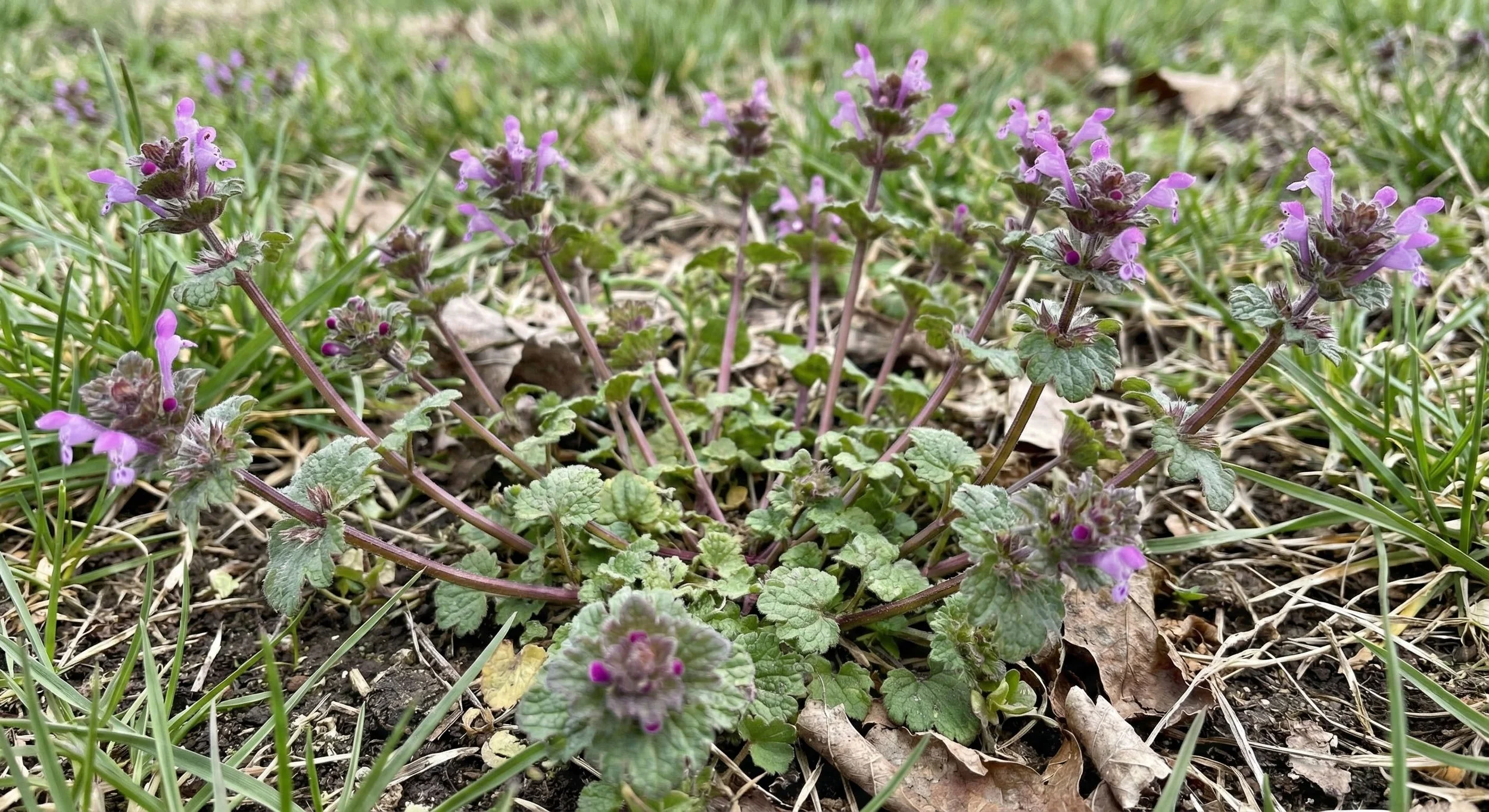
Henbit
If you have ever driven past a Kentucky field in March and seen a wash of purple, you are looking at Henbit or its close cousin, Purple Deadnettle. These are members of the mint family, characterized by their square stems and vibrant purple, tubular flowers.
Identification: Look for low-growing plants with reddish-purple upper leaves. Henbit leaves wrap directly around the stem, while Deadnettle leaves are triangular and attached by a short stem.
The Threat: They spread aggressively in thin turf, forming dense patches that compete with your waking grass for early-season sunlight and nutrients.
2. Hairy Bittercress
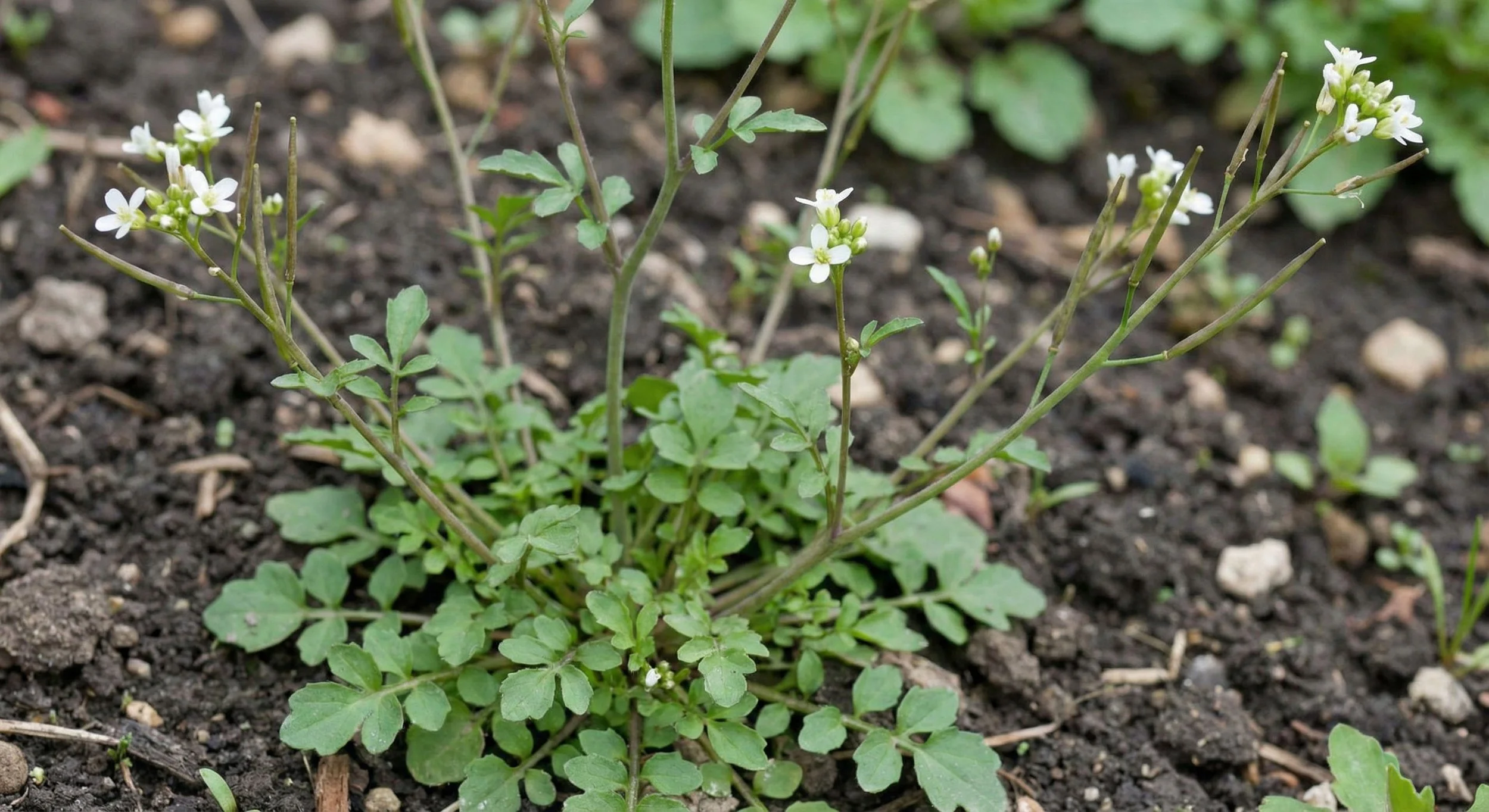
Hairy bittercress
Often the first weed to bloom in Lexington lawns, Hairy Bittercress is a member of the mustard family. It is deceptively small but spreads with incredible efficiency.
Identification: It begins as a flat rosette of leaves at ground level. As it matures, it sends up a thin stalk with tiny white flowers.
The Threat: The danger lies in its seed pods. When mature, these pods "explode" at the slightest touch—whether from a mower or a pet—launching seeds several feet away and ensuring a new generation of weeds for next year.
3. Wild Garlic and Wild Onion
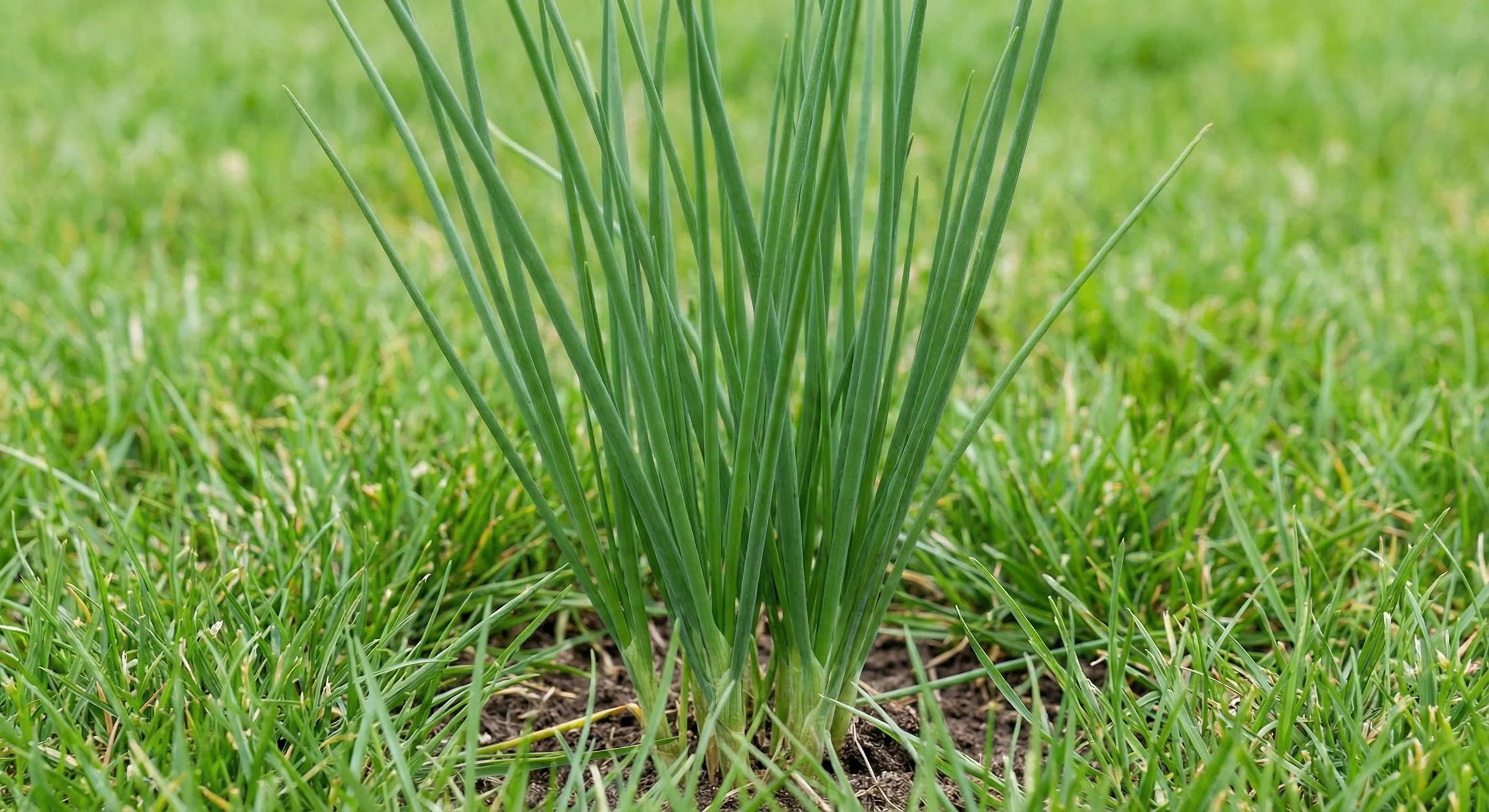
Wild onion
These perennial weeds are unmistakable due to their distinct aroma. They often appear as tall, dark green clumps that grow much faster than your dormant turfgrass, creating an uneven, unkempt appearance.
Identification: They look like tufts of chives or tall grass. The easiest way to confirm their identity is the scent: if you mow or crush the leaves and smell onion or garlic, you have found your culprit.
The Threat: Because they grow from underground bulbs, they are notoriously difficult to control with standard counter-measures. Pulling them often leaves the bulblets behind, allowing them to regrow immediately.
4. Common Chickweed
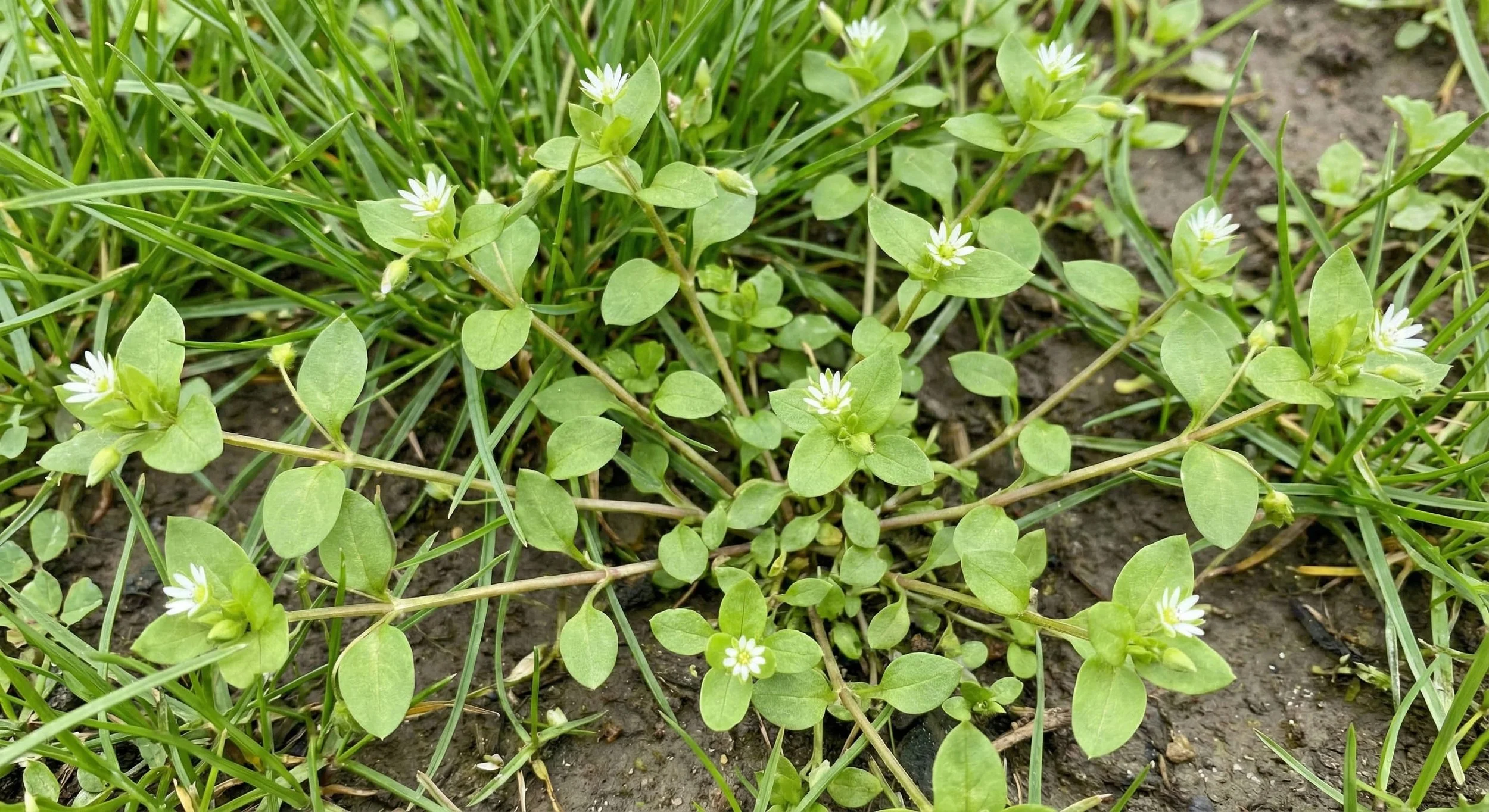
Common chickweed
True to its name, Common Chickweed is ubiquitous in our region. It is a winter annual that prefers cool, wet conditions—making Kentucky springs its ideal environment.
Identification: It grows in dense, mat-like patches with small, egg-shaped leaves and tiny white star-shaped flowers.
The Threat: Chickweed forms a thick canopy that smothers the desirable turf underneath, leaving behind large bare spots when the weed finally dies back in the summer heat.
The Legacy Lawn Approach
The presence of these weeds is not just an aesthetic issue; it is a signal that your lawn’s defenses are being compromised during a critical transition period. "Over-the-counter" solutions often fail because the timing is incorrect—by the time you see the flowers, the seeds for next year may already be setting.
Our Advanced Lawn Health program is designed to break this cycle. We utilize targeted, science-based treatments to manage these invaders effectively, ensuring your lawn has the resources it needs to thrive as soon as spring fully arrives.
Is your lawn ready for the season ahead? Don't let winter weeds dictate the quality of your outdoor living space. Contact us today to schedule your consultation and ensure your landscape remains a curated, weed-free environment year-round.
